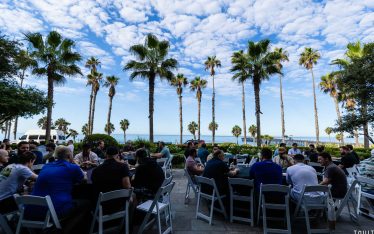
A successful corporate retreat needs more than a scenic setting. It needs a rhythm that gives your team time to think, connect, and recharge, without packing every hour with another session or activity.
If you have already chosen Palm Springs, this playbook helps you shape the days that follow. For the destination decision itself, read our companion guide to why companies choose Palm Springs for wellness and incentive retreats.
Use this schedule as a starting point, then adapt it to your group size, objectives, mobility needs, and travel plans. The right Palm Springs corporate retreat photography can document the retreat’s key moments while letting participants stay focused on the experience.
Start with the retreat’s working rhythm
A multi-day retreat works best when each day has a clear purpose. An arrival evening should help people settle in. A full working day should protect time for meaningful decisions. The final morning should turn discussion into action before people depart.
For many teams, a two-night, three-day format offers enough space for all three. If you have only two days, keep the same rhythm and choose one group activity rather than trying to squeeze in several.
Day 1: Arrive, orient, connect
- 3:00–5:00 p.m. — Arrivals, check-in, and personal downtime
- 5:00–5:30 p.m. — Welcome and a short overview of the retreat’s goals
- 5:30–6:30 p.m. — Optional small-group conversations or an informal team exercise
- 6:30–8:30 p.m. — Welcome dinner and relaxed introductions
Keep the first evening light. People may be arriving on different schedules, and a full presentation can make the retreat feel like a regular workday in a different location. Use dinner to help colleagues reconnect and give everyone a clear view of what comes next.
Day 2: Do the core work, then step away
- 7:00–8:00 a.m. — Optional movement, a guided walk, or quiet personal time
- 8:00–8:45 a.m. — Breakfast
- 9:00–12:00 p.m. — Strategy session, with a short break
- 12:00–1:30 p.m. — Lunch and unstructured downtime
- 1:30–3:30 p.m. — Breakouts, planning, or cross-team problem solving
- 3:30–4:15 p.m. — Reset, refreshments, and activity changeover
- 4:15–6:30 p.m. — Optional group outing
- 6:30–8:30 p.m. — Dinner and informal conversation
Make the morning the anchor for important discussions. After lunch, use a different format: working groups, paired conversations, or a review of specific decisions. That shift helps participants stay involved without extending one long plenary session.
Day 3: Make the next steps clear
- 7:00–8:30 a.m. — Optional activity or open time
- 8:30–9:30 a.m. — Breakfast and checkout preparation
- 9:30–11:00 a.m. — Summarize decisions, owners, and next milestones
- 11:00 a.m.–12:00 p.m. — Buffer for final conversations and departures
End with a concrete record of what the group agreed to do. Assign an owner to each action, identify the first milestone, and set a follow-up date. A retreat is more useful when its outcomes remain clear after everyone returns to work.
Schedule around the desert, not against it
In Palm Springs, the order of activities matters. Put optional outdoor movement earlier in the day, protect the middle of the schedule for indoor work or shaded downtime, and consider late-afternoon or evening programming for activities outside.
That does not mean every retreat needs an ambitious outdoor itinerary. It means you should avoid making an outdoor activity a fixed requirement at the least comfortable point in the day. Build in water breaks, shaded rest, and an indoor alternative. Check conditions close to the event, and follow local guidance for any trail or outdoor activity.
Choose a meeting base that makes transitions simple. The JW Marriott Desert Springs Resort is one Palm Desert option planners may consider as a resort setting. For a guided walk, Indian Canyons offers established trails to explore. Confirm current access, suitability, transportation, and conditions before adding any off-site activity to your schedule.
Pick activities that give the group a choice
A retreat activity should help people connect. It should not become a test of fitness or a mandatory detour from the work. Offer a few formats, explain what each involves, and make it easy to opt for a quieter alternative.
Golf
 Golf can give colleagues time to talk in a less formal setting. If you include it, decide whether it is a short optional block or a primary group activity. Share the expected duration and dress requirements in advance. Provide a non-golf option so participation does not depend on someone’s interest or experience.
Guided hikes
A walk can create room for informal conversation and a change of pace. Choose a route that fits the group rather than selecting the most demanding option. Check trail status and access close to the event, and make the activity optional. Participants should know what to bring and how long the outing is expected to take.
Jeep tours and excursions
A guided Jeep outing can give participants a shared experience beyond the meeting room. Before booking, confirm timing, transportation arrangements, accessibility, and what happens if conditions change. Keep the return time realistic so the activity does not squeeze out dinner or a needed break.
Spa and pool time
Not every group needs another scheduled challenge. A protected block for a pool, spa, or personal downtime can help participants reset before the next session. Treat it as intentional open time, not an empty slot that must be filled.
Plan photography that fits the retreat’s pace
Multi-day retreat coverage should tell the story without taking over the schedule. Work with your photographer to identify the moments that matter most: the welcome, key discussions, team interaction, group portraits, activities, and the closing commitments.
A documentary approach helps keep the experience natural. A professional event photographer can coordinate with your planner on timing, important people, access, and any moments that should remain private. Brief the photographer on sensitive sessions and make clear when participants should be photographed, and when they should not.
It also helps to set expectations with attendees. Let them know the purpose of coverage, where images may be used, and how to raise a privacy concern. For video, identify a few intentional moments to record rather than adding a camera to every session. The result is a useful record of the retreat, with participants still able to focus on the people in the room.
Tavits Photography has documented more than 1,173 corporate events, retreats included. Let us plan coverage that supports your retreat instead of interrupting it.
Use a simple planning checklist
Four to eight weeks before
- Confirm retreat goals, dates, attendee count, and decision-makers.
- Choose your meeting base and confirm room layouts, meals, and accessibility needs.
- Ask attendees about dietary needs, mobility considerations, and activity preferences.
- Select one main group activity and a lower-key alternative.
- Decide which sessions and social moments need photo or video coverage.
One to three weeks before
- Send the agenda, dress guidance, travel details, and activity notes.
- Confirm transportation, activity timing, and any access requirements.
- Share the photography plan, including privacy preferences and must-capture moments.
- Assign a retreat lead and a backup contact for schedule changes.
The day before and on site
- Recheck conditions and confirm any outdoor plans with the relevant operator or site.
- Keep an indoor alternative ready.
- Share one clear schedule with attendees and staff.
- Leave transition time between sessions, meals, and activities.
- Close each working block with a short recap of decisions and next steps.
Palm Springs corporate retreat FAQ
How long should a corporate retreat last?
Two nights and three days gives you room for an arrival evening, a full workday, and a final session before departures. A shorter retreat can still work if you prioritize a single core objective and avoid overloading the schedule.
Should every attendee take part in the outdoor activity?
No. Offer the activity as a choice, not a test of participation. Make the duration and physical demands clear, and provide an appealing alternative for anyone who prefers indoor time or a quieter break.
What should I do if outdoor plans need to change?
Build flexibility into the agenda before the retreat begins. Identify an indoor option, decide who can approve a change, and tell attendees how updates will be shared. Check conditions close to the activity and follow current local guidance.
How much photography coverage do we need across several days?
Start with the story you need to tell afterward. You may want coverage of the welcome, key working sessions, one group activity, dinner, and a closing portrait. Your photographer can help match coverage to the program and privacy expectations.
How do we keep the retreat productive without making it feel packed?
Give each day one main purpose, leave room between blocks, and protect time for unstructured conversation. End working sessions with decisions and owners so you do not need to add extra meetings to clarify outcomes later.
When you’re comparing palm springs corporate retreat venues or planning around corporate event venues palm springs, build the agenda first, then choose the setting and activities that support it. Let us help you create a practical coverage plan for your next retreat.